

Information about a product


| Edition: | 1 |
| Place and year of publication: | Warszawa 2025 |
| ISBN/ISSN: | 978-83-235-7049-3 |
| EAN: | 9788323570493 |
| Number of page: | 466 |
| Binding: | Miękka |
| Format: | 17x24 cm |
| Weight: | 745 g |
| Method of publication: | Druk |
| Publication type: | Praca naukowa |
| DOI: | https://doi.org/10.31338/uw.9788323570516 |
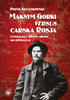
Maxim Gorky vs Tsarist Russia: The Literary and Ideological Path to Revolution
Maxim Gorky was one of the most popular writers of the turn of the 20th century but also a figure key to understanding the causes of the Russian Revolution. The monograph both reconstructs Gorky’s biography and attempts to identify the sources of Soviet totalitarianism: whether it was a consequence of Russian autocracy or a utopian project of never ending transformation of the human being. To this end it examines the roots of Russian imperialism and explains the reasons for the Bolsheviks’ success in 1917. The book also offers a panorama of the dusk of the Russian Empire, since Gorky met with the most prominent men of letters (Leo Tolstoy, Anton Chekhov, Ivan Bunin), artists (Feodor Chaliapin, Vladimir Nemirovich-Danchenko), and politicians (Vladimir Lenin, Alexandre Bogdanov, Anatoly Lunacharsky. Serge Witte) but never forgot about peasants and workers, whose life at The Lower Depths he knew from personal experience.
Keywords: Maxim Gorky, Russia, revolution, war, Lenin.
Maxim Gorky was one of the most popular writers of the turn of the 20th century but also a figure key to understanding the causes of the Russian Revolution. The monograph both reconstructs Gorky’s biography and attempts to identify the sources of Soviet totalitarianism: whether it was a consequence of Russian autocracy or a utopian project of never ending transformation of the human being. To this end it examines the roots of Russian imperialism and explains the reasons for the Bolsheviks’ success in 1917. The book also offers a panorama of the dusk of the Russian Empire, since Gorky met with the most prominent men of letters (Leo Tolstoy, Anton Chekhov, Ivan Bunin), artists (Feodor Chaliapin, Vladimir Nemirovich-Danchenko), and politicians (Vladimir Lenin, Alexandre Bogdanov, Anatoly Lunacharsky. Serge Witte) but never forgot about peasants and workers, whose life at The Lower Depths he knew from personal experience.
Keywords: Maxim Gorky, Russia, revolution, war, Lenin.
Zobacz również