

Information about a product


| Edition: | 1 |
| Place and year of publication: | Warszawa 2025 |
| Publication language: | ukraiński , polski |
| ISBN/ISSN: | 978-83-235-7128-5 |
| EAN: | 9788323571285 |
| Method of publication: | PDF |
| DOI: | https://doi.org/10.31338/uw.9788323571285 |
| Publication type: | Praca naukowa |
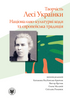
The Works of Lesia Ukrainka: National and Cultural Codes and European Tradition
This publication attempts a new interpretation of the legacy of Ukraine’s greatest female writer through the prism of European tradition. The authors of the individual chapters ponder the question of how her work is perceived both in Ukraine and abroad. The volume is divided into four parts. The first analyses the cultural codes used by the writer and their connection with the idea of Ukrainian national revival. In the next part, the authors reinterpret her dramatic texts. The third part concerns the interpretation of selected works by Lesia Ukrainka in the European tradition, while the fourth part deals with the historical contexts of her work. In each chapter, the researchers attempt to reinterpret the writer’s works, presenting her as both a representative of European modernism and a deeply committed Ukrainian patriot. Apart from her texts, the criticism that accompanied her during her lifetime, through the Soviet era and up to the present day has also been analysed. The resulting monograph is an important source not only for researchers of Ukrainian literature, but also for a wide audience interested in Ukrainian culture.
Keywords: Lesia Ukrainka, cultural codes, dramaturgy, European tradition, Ukrainian literature.
This publication attempts a new interpretation of the legacy of Ukraine’s greatest female writer through the prism of European tradition. The authors of the individual chapters ponder the question of how her work is perceived both in Ukraine and abroad. The volume is divided into four parts. The first analyses the cultural codes used by the writer and their connection with the idea of Ukrainian national revival. In the next part, the authors reinterpret her dramatic texts. The third part concerns the interpretation of selected works by Lesia Ukrainka in the European tradition, while the fourth part deals with the historical contexts of her work. In each chapter, the researchers attempt to reinterpret the writer’s works, presenting her as both a representative of European modernism and a deeply committed Ukrainian patriot. Apart from her texts, the criticism that accompanied her during her lifetime, through the Soviet era and up to the present day has also been analysed. The resulting monograph is an important source not only for researchers of Ukrainian literature, but also for a wide audience interested in Ukrainian culture.
Keywords: Lesia Ukrainka, cultural codes, dramaturgy, European tradition, Ukrainian literature.