

Information about a product


| Edition: | 1 |
| Place and year of publication: | Warszawa 2025 |
| Publication language: | rosyjski , polski |
| ISBN/ISSN: | 978-83-235-7120-9 |
| EAN: | 9788323571209 |
| Number of page: | 330 |
| Binding: | Miękka |
| Format: | 17x24 cm |
| Method of publication: | Druk |
| Publication type: | Praca naukowa |
| DOI: | https://doi.org/10.31338/uw.9788323571223 |
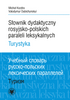
An Educational Dictionary of Russian-Polish Lexical Parallels. Tourism (nouns)
This dictionary/monograph, prepared at the Laboratory of Lexicographic Research at the University of Warsaw, offers a detailed analysis of Russian-Polish lexical parallels within the domain of tourism. The publication aims to facilitate the learning of specialised language and prevent communicative errors arising from semantic similarities and differences in the meanings of words that are formally similar in Russian and Polish. The dictionary is an invaluable tool for students, educators, translators, and professionals in the tourism industry. By combining linguistic analysis with cultural insights, the monograph supports the development of intercultural and professional competences, meeting the needs of effective communication in today’s globalised environment.
Keywords: Russian-Polish lexical parallels, lexicography, tourism, glottodidactics, Russian language instruction, Polish language instruction.
This dictionary/monograph, prepared at the Laboratory of Lexicographic Research at the University of Warsaw, offers a detailed analysis of Russian-Polish lexical parallels within the domain of tourism. The publication aims to facilitate the learning of specialised language and prevent communicative errors arising from semantic similarities and differences in the meanings of words that are formally similar in Russian and Polish. The dictionary is an invaluable tool for students, educators, translators, and professionals in the tourism industry. By combining linguistic analysis with cultural insights, the monograph supports the development of intercultural and professional competences, meeting the needs of effective communication in today’s globalised environment.
Keywords: Russian-Polish lexical parallels, lexicography, tourism, glottodidactics, Russian language instruction, Polish language instruction.
This monograph exemplifies a high standard of contrastive lexicography. It successfully integrates theory, practical lexicographic technique, and didactic intent. In comparison to other dictionaries on Russian-Polish lexical relations, this publication occupies a valuable niche by combining semantic depth with didactic usability. It is highly recommended for linguists, translators, advanced students of Russian and Polish languages, and researchers focusing on tourism vocabulary and contrastive studies.
Irena Mikulaco, Ph.D., Senior Lecturer Head of the Sub-Department of the Foreign Languages, Faculty of Humanities
Juraj Dobrila University of Pula, Croatia
Irena Mikulaco, Ph.D., Senior Lecturer Head of the Sub-Department of the Foreign Languages, Faculty of Humanities
Juraj Dobrila University of Pula, Croatia
Zobacz również

Polecane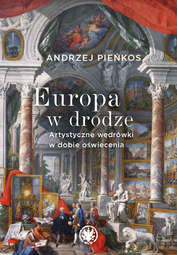
Europa w drodze. Artystyczne wędrówki w dobie oświecenia41,00 zł
36,90 zł
Details
- The author proposes a fragmentary look at the map of artistic Europe in the Enlightenment. He follows the movements of artists, mainly painters, between different centres, traces motivations behinds migrations, draws out the importance of newcomers
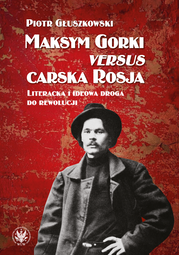
Maksym Gorki versus carska Rosja. Literacka i ideowa droga do rewolucji59,00 zł
53,10 zł
Details
- Maxim Gorky was one of the most popular writers of the early 20th century but also a figure key to understanding the causes of the Russian Revolution. The monograph both reconstructs Gorky’s biography and attempts to identify the sources of Soviet
Finanse i podatki w trzecim sektorze37,00 zł
33,30 zł
Details
- The publication is the result of the 8th Polish-Spanish Scientific Conference “Finance and Taxes in the Third Sector”, organized in October 2024 by the Centre of Spanish and European Law of the University of Warsaw. The problems discussed in the book are